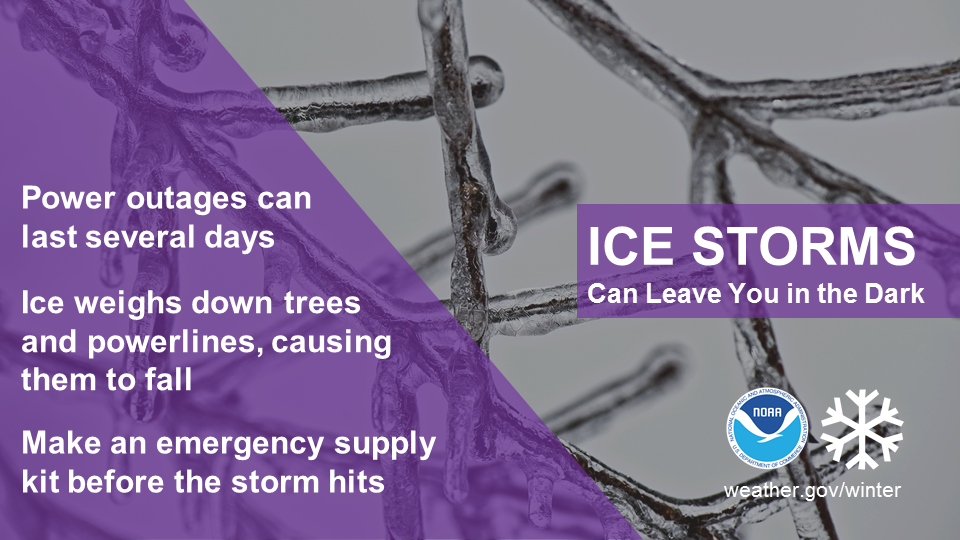
| Winter storms create a higher risk of car accidents, hypothermia, frostbite, carbon monoxide poisoning, and heart attacks from overexertion. Winter storms and blizzards can bring extreme cold, freezing rain, snow, ice, and high winds. A winter storm can:
Last a few hours or several days;
Knock out heat, power, and communication services; and
Place older adults, young children, and sick individuals at greater risk.
IF YOU ARE UNDER A WINTER STORM WARNING, FIND SHELTER RIGHT AWAY
Stay off roads.
Stay indoors and dress warmly.
Prepare for power outages.
Use generators outside only and away from windows.
Listen for emergency information and alerts.
Look for signs of hypothermia and frostbite.
Check on neighbors.
HOW TO STAY SAFE WHEN A WINTER STORM THREATENS:
Prepare NOW
Know your area’s risk for winter storms. Extreme winter weather can leave communities without utilities or other services for long periods of time.
Prepare your home to keep out the cold with insulation, caulking, and weather stripping. Learn how to keep pipes from freezing. Install and test smoke alarms and carbon monoxide detectors with battery backups.
Pay attention to weather reports and warnings of freezing weather and winter storms. Sign up for your community’s warning system. The Emergency Alert System (EAS) and National Oceanic and Atmospheric Administration (NOAA) Weather Radio also provide emergency alerts.
Gather supplies in case you need to stay home for several days without power. Keep in mind each person’s specific needs, including medication. Do not forget the needs of pets. Have extra batteries for radios and flashlights.
Create an emergency supply kit for your car. Include jumper cables, sand, a flashlight, warm clothes, blankets, bottled water, and non-perishable snacks. Keep the gas tank full.
Learn the signs of, and basic treatments for, frostbite and hypothermia.
Survive DURING
Stay off roads if at all possible. If trapped in your car, then stay inside.
Limit your time outside. If you need to go outside, then wear layers of warm clothing. Watch for signs of frostbite and hypothermia.
Avoid carbon monoxide poisoning. Only use generators and grills outdoors and away from windows. Never heat your home with a gas stovetop or oven.
Reduce the risk of a heart attack. Avoid overexertion when shoveling snow.
Watch for signs of frostbite and hypothermia and begin treatment right away.
Check on neighbors. Older adults and young children are more at risk in extreme cold.
RECOGNIZE AND RESPOND
Frostbite causes loss of feeling and color around the face, fingers, and toes.
Signs: Numbness, white or grayish-yellow skin, firm or waxy skin
Actions: Go to a warm room. Soak in warm water. Use body heat to warm. Do not massage or use a heating pad.
Hypothermia is an unusually low body temperature. A temperature below 95 degrees is an emergency.
Signs: Shivering, exhaustion, confusion, fumbling hands, memory loss, slurred speech, or drowsiness
Actions: Go to a warm room. Warm the center of the body first—chest, neck, head, and groin. Keep dry and wrapped up in warm blankets, including the head and neck. |